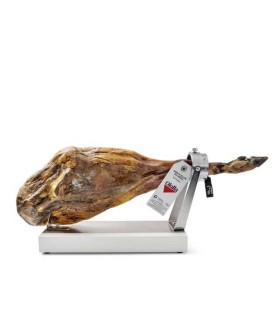
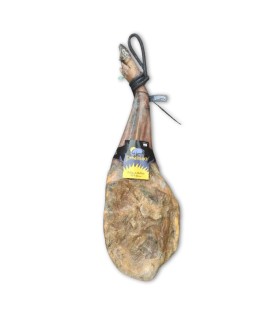
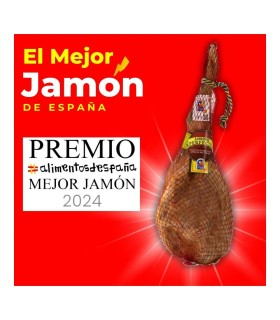
The ham comes from the pig’s hind legs. The front legs provide the raw material for what is known as shoulders or "paletillas".
When choosing quality ham, one of the criteria to consider is the breed. The Iberian breed is exclusive and unique to the Iberian Peninsula. It is the origin of Iberian ham.
White ham, although we commonly call it Serrano ham, its correct denomination is Cured Ham. Depending on the curing time, it may be classified as bodega, reserva, or gran reserva cured ham. The term Serrano ham can only be applied to those white hams that meet the requirements set out in the PGI (Protected Geographical Indication) specifications for Serrano Ham.
In addition to breed, an important factor to consider is the feeding. Intensive farming with feed-based diets is the standard for white pigs.
In contrast, Iberian pigs usually roam freely in the dehesas, eating acorns, selected feeds, or even fruit.
These differences determine the quality of the hams we consume.
Iberian ham is recognized for a more authentic flavor in its meat and fat. The genetics and feeding of Iberian pigs result in a high level of oleic acid, or monounsaturated fats, in the meat. This is due to the metabolism of acorns—rich in monounsaturated fatty acids—and free-range rearing in the dehesas. All these conditions give Pata Negra ham many more aromas and flavors characteristic of Iberian-breed pigs.
You’ve likely heard many comments and read articles about Iberian ham—its purity, diet, slicing, marbling, curing time, and the new regulation R.D. 4/2014.
Is it driving you crazy? Don’t worry, you’re in the right place… at Ibericomio.es you’ll find the best selected Iberian ham for you. We’re absolutely crazy about Iberian… so crazy that we put some sanity into so many options… only madmen and children speak the truth.
The issue is more complex than we’d all like. To give you an idea, a quality standard for Iberian ham was approved in 2001. Since then, modifications and new orders were issued until in 2007 a new quality standard was published. However, there were still those who sought to confuse consumers by using symbols and names similar to Serrano hams.
This regulation allows consumers to differentiate each type of Iberian ham and buy with complete peace of mind.